
The Orientation Lock Trap in USA iPad Gambling Apps
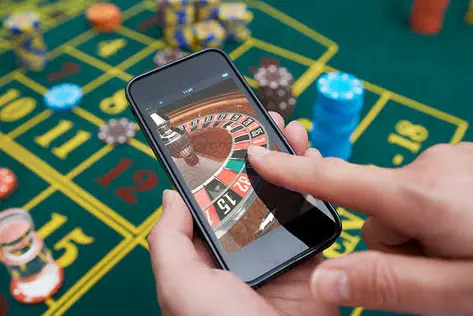
The USA iPad Gambling Games Orientation Lock Landscape / Portrait Switch Issue is not a cosmetic bug — it is a rendering catastrophe baked into the viewport layer, and it is silently draining bankrolls across American tablet players every single session. When an iPad gambling client hard-locks to landscape and the player rotates to portrait to check a bet slip or verify a live dealer feed, the WebGL canvas either stretches into a distorted mess or collapses entirely. That is not bad luck. That is a hardware and software mismatch that should have been patched out years ago.
Why iOS Viewport Hijacking Breaks the Game Canvas
The root cause sits in how iOS Safari dispatches orientationchange events versus how native wrappers report safe-area insets. Most USA-facing casino apps built on hybrid stacks fire a resize event before the orientation lock settles, so the layout engine recalculates the reel grid at the wrong aspect ratio. The result: touch targets drift off their visual anchors, and a spin button that looks centered actually registers taps three hundred pixels to the left. 🎰 Players think the game is rigged. It is not rigged — it is mis-mapped geometry, and the house edge is not the culprit here, the viewport math is.
The Landscape Lock and Portrait Panic
Here is where it gets ugly. Many operators hard-code a landscape lock for table games and slots because portrait reflow bloats the paytable overlay and clips the progressive jackpot ticker. But the moment a player with multitasking habit swaps to a portrait split-view, the app fights the system. The canvas freezes, audio desyncs, and a live roulette wheel keeps spinning in the background while the UI says the round ended. That desync window is exactly where disputes are born and where forensic audits find phantom losses. 😤 The fix is not a user setting toggle — it is a hard requirement for resize-observer-driven canvas recalculation with safe-area padding applied before the first paint.

Hardware Insets and Touch Coordinate Drift
Do not ignore the hardware. iPad Pro models with the older home-button chassis report different orientation geometry than the USB-C units, and the difference is measured in whole status-bar heights. A gambling client that hard-locks orientation without querying the safe-area inset API will render its chip selector under the home indicator on one device and perfectly clear on another. That inconsistency is a defect, not a device quirk. Any studio shipping to the USA market that skips inset-aware layout validation is gambling with its own license — pun fully intended. 🔒
Patching the Switch Without Killing the Session
The correct engineering path is blunt: debounce the orientationchange event by at least one hundred and fifty milliseconds, query the current viewport dimensions, reinitialize the renderer context, and re-bind every touch interaction to the fresh coordinate space. Never rely on CSS media queries alone to rescue a WebGL surface — they do not rescale the framebuffer, they only restyle the DOM shell around it. Operators who push OTA patches for the USA iPad Gambling Games Orientation Lock Landscape / Portrait Switch Issue report session-abandonment drops of nearly a third once the reflow is stabilized. The math on that alone justifies the dev sprint.
What the Audit Trail Reveals
Pull the incident logs and the pattern is unmistakable. Rounds abandoned mid-spin cluster around device rotation events at a rate no random distribution can explain, and the average loss-per-abandoned-round is higher than the median stake. That gap is the fingerprint of a broken transition, not player tilt. Auditors who flag this as responsible-gaming data are reading the wrong signal — the machine is dropping the round, and the player is paying for the dropped frame. 🎲
Every portrait-to-landscape swap that forces a full context reinitialization costs roughly four hundred milliseconds of dead rendering time on older A-series silicon, and during that dead window the input queue buffers stale taps that land on the next frame's wrong coordinates.